TMT Bar Price by Diameter — 8mm to 32mm Rod Price Decoded for Indian Construction
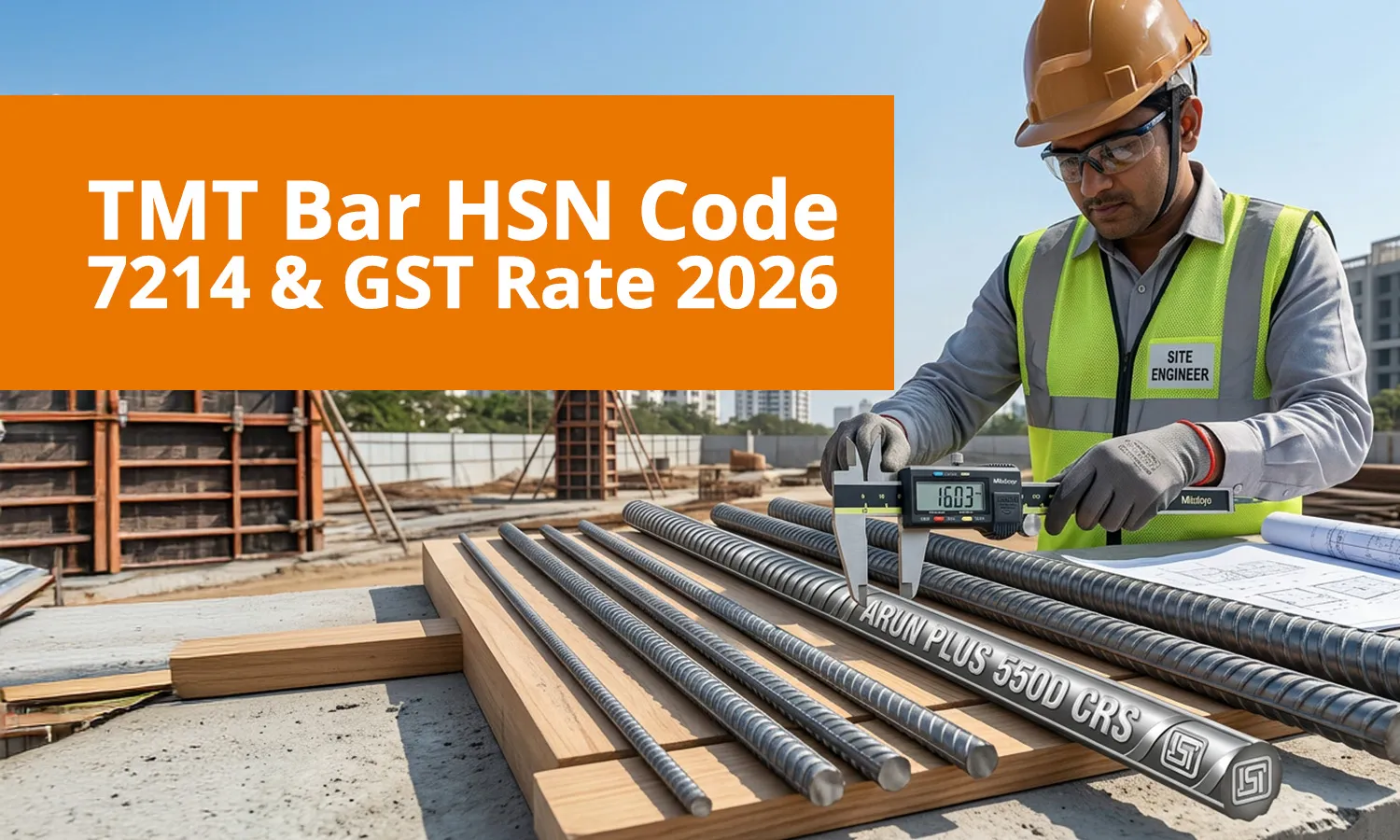
The first thing every first-time TMT buyer in India discovers is that the 8mm rod price today is not the same as the 12mm rod price today, even when both bars are made from the same heat of steel by the same mill. The smaller diameter costs more per kilogram. This counter-intuitive pricing logic catches homeowners and even some site engineers, off guard, and dealers rarely explain why. As a Chennai-based TMT manufacturer that has rolled bars from 8mm to 32mm for years, we have answered this question on factory tours, contractor calls and procurement audits more times than we can count. Here is the manufacturer-level decoder for diameter-wise steel rod price across the seven standard sizes used in Indian construction, and how to read each quote with confidence.
Why do smaller diameters cost more per kg?
A billet enters the rolling mill at 130mm × 130mm or 150mm × 150mm cross-section and gets squeezed through a series of pass sequences to its final diameter. Reducing that billet to an 8mm bar takes 18 to 22 rolling passes; reducing the same billet to 25mm takes 8 to 10 passes. More passes mean more rolling time, higher mill-roll wear, greater scale loss and more crop ends as scrap. The mill recovers all of that through a size differential on its rate card, typically ₹2 to ₹4 per kg between 8mm and 25mm. This is the structural reason the 8mm rod price today sits above the 16mm or 20mm rod price today across every brand in India. It is not opportunism; it is rolling economics.
Diameter-wise weight and pieces-per-tonne reference
Every diameter has a nominal weight per metre defined under IS 1786:2008. Knowing these numbers lets you cross-check any quote you receive in seconds. Standard bar length in South India is 12 metres.
| Diameter | Weight per metre (kg) | Pieces per tonne (12 m) | Common application |
|---|---|---|---|
| 8 mm | 0.395 | 211 | Stirrups, ties, slab distribution steel |
| 10 mm | 0.617 | 135 | Slab main steel (short spans) |
| 12 mm | 0.888 | 94 | Slab and beam steel (most common) |
| 16 mm | 1.580 | 53 | Beam and column main reinforcement |
| 20 mm | 2.470 | 34 | Column verticals, transfer beams |
| 25 mm | 3.850 | 22 | Heavy columns, pile caps |
| 32 mm | 6.310 | 13 | Industrial foundations |
Use this table the next time a dealer hands you a bundle quote without breaking down the diameter mix. A 1-tontmt steelprice for a 100% 8mm order will land ₹3-4 per kg higher than the same tonnage ordered as 25mm.
8mm to 20mm: application-wise pricing logic
The 8mm rod price today commands the highest per-kg rate because 8mm consumes the most rolling cost per kg, and it is the workhorse for stirrups, ties and slab distribution steel. The 10mm rod price today applies mostly to slab main reinforcement in short-span residential work.
The 12mm rod price today is the most negotiated retail rate in India because 12mm is the bread-and-butter slab and beam steel for G+1 and G+2 homes, and the answer to “how many bars in 1 bundle 12mm” is five 12-metre bars per ~53 kg bundle in standard South Indian dealer norms. 16mm rod price today applies to beam and column main reinforcement in residential and commercial structures.
The 20mm rod price today is column-vertical territory and transfer-beam reinforcement. Above that, 25mm and 32mm are reserved for industrial foundations, pile caps and tall-building columns.
How to compare diameter pricing across brands
Ask three things before accepting any diameter-wise quote:
(1) the nominal weight tolerance. IS 1786 allows ±7% on 8mm, ±5% on 10mm and 12mm, ±3% on 16mm and above; ensure the dealer is quoting on nominal weight, not actual.
(2)Fe 550Dcarries a premium over lower structural grades due to tighter chemistry control, higher strength, and improved ductility performance.
(3) the brand source, BIS-marked TMT bars from verified manufacturers. The tmt steel rod price you compare is meaningful only when those three variables are matched across dealers.
Frequently Asked Questions
Q1. Is the 8mm rod price today really higher than 12mm or 16mm per kg?
Yes, typically by ₹2 to ₹4 per kg, driven by higher rolling cost and yield loss for smaller diameters.
Q2. How many 12mm bars are there in 1 tonne?
Approximately 94 pieces of 12-metre length, since 12mm weighs 0.888 kg per metre.
Q3. Does 32mm cost less per kg than 12mm?
Rolling cost per kg is lower for 32mm, but retail low-volume premiums can offset that. In most cases, 32mm typically prices ₹1-2 below 12mm at most mills.
Q4. Which diameter is most negotiated in retail?
12mm, it is the dominant slab and beam steel in residential G+1 and G+2 construction across South India.
Building something that must last?
Arun Plus TMT delivers high-strength, corrosion-resistant bars trusted across Tamil Nadu.
Get a Quote →